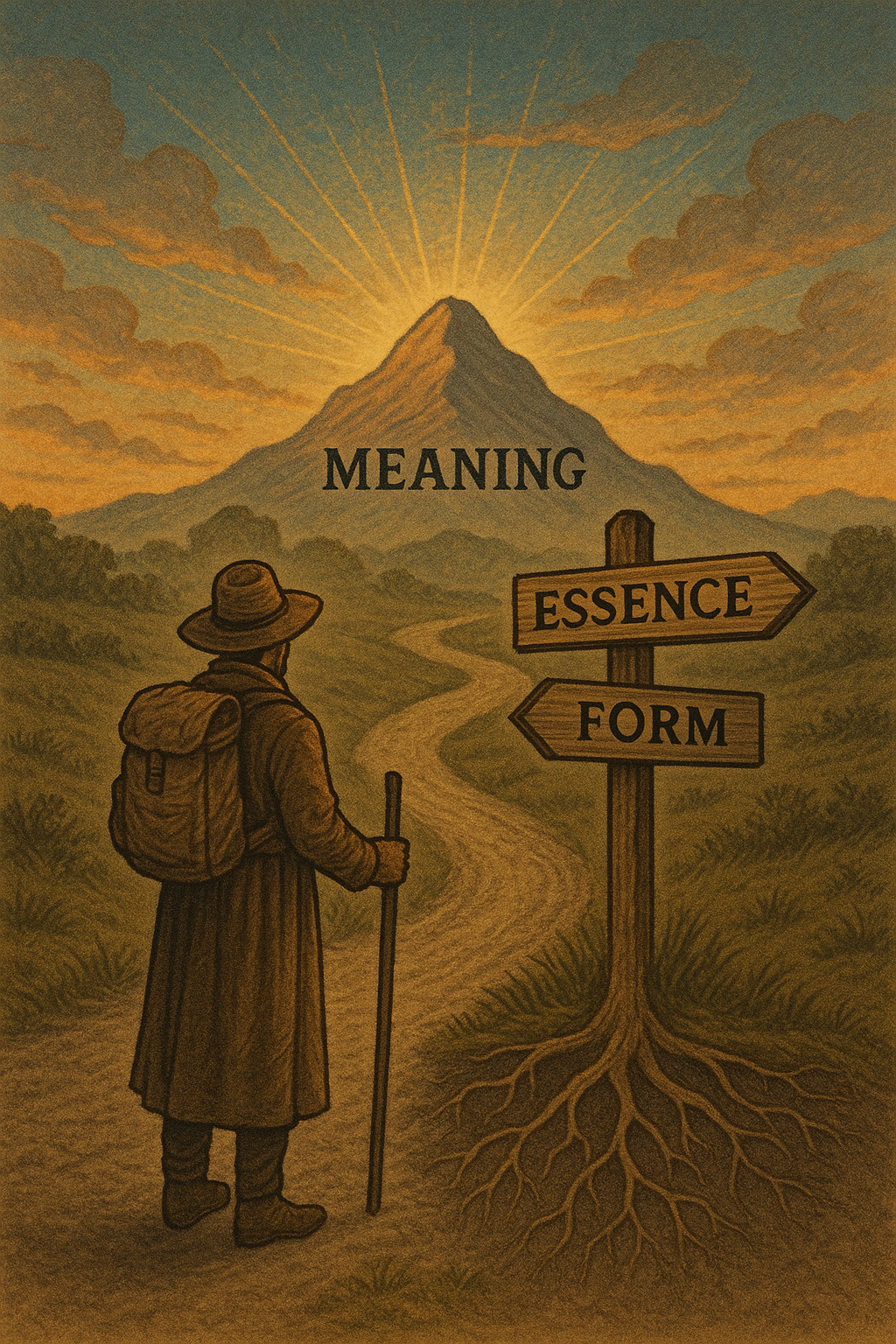
We inhabit a world that speaks in two voices: one of form, and one of formlessness. One that tells us what things are, and another that whispers what they mean. These voices echo across every human life, yet most only listen to one.
In this exploration, we unfold the enduring distinction between the physical and the metaphysical—not as a sterile academic exercise, but as a living meditation on what it means to be fully human.
Two hands. One reaching into the world. One reaching into meaning.
The Physical World: What Is Measurable
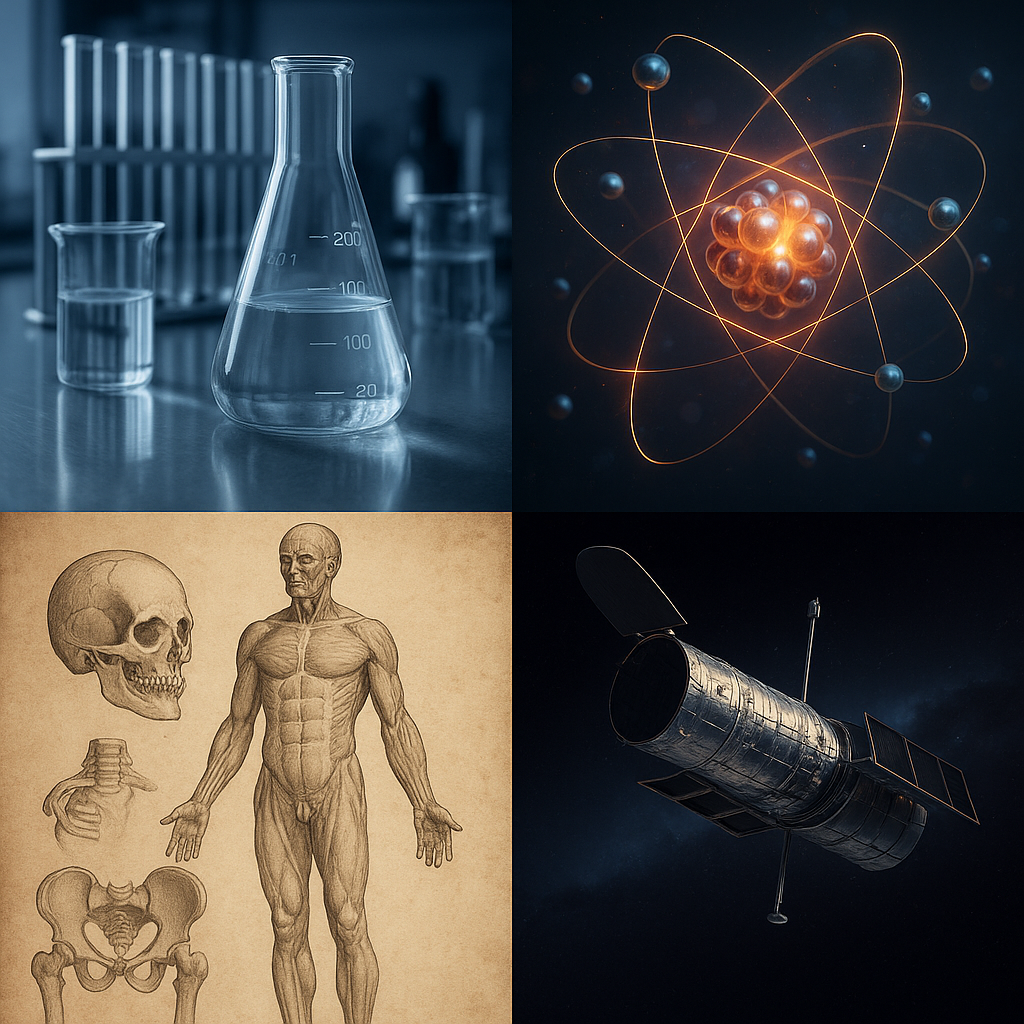
The physical world is the realm of the five senses. It is governed by observable laws—Newton’s mechanics, Einstein’s relativity, Darwin’s evolution. We wake each day into its gravitational pull, navigate its terrain, and adapt to its changes.
It is the visible domain of phenomena, of things that appear and can be verified. It includes bodies, objects, energy, light, time, and space. Scientific disciplines, from biology to engineering, function primarily within this empirical framework.
As Aristotle described it in Physics, the study of nature is concerned with “things that move” and “have within themselves a principle of motion and rest” (Aristotle, Physics, Book II). In this domain, truth is equated with replication, quantification, and prediction.
But is this all there is?
The physical world: visible, knowable, governed by laws.
The Metaphysical Realm: What Is Meaningful
The word metaphysics comes from the Greek meta ta physika, meaning “after the physics.” It was the title given to Aristotle’s works that came after his physical treatises—not because they were written later, but because they addressed a deeper level of reality.
Metaphysics concerns itself not with objects, but with being—with the first causes, principles, and nature of existence itself. It asks questions that science alone cannot:
What is the nature of consciousness?
Does time exist independently of the mind?
What is the origin of moral obligation?
Is there a soul? A purpose? A God?
These are not scientific questions, but they are not irrational. They belong to a different kind of knowing—one that Plato described as recollection of eternal Forms, or what Immanuel Kant called synthetic a priori knowledge: truths that transcend experience, yet ground it (Kant, Critique of Pure Reason).
Metaphysics includes ontology (the study of being), epistemology (the study of knowledge), and even aesthetics and ethics when they reach beyond mere opinion.
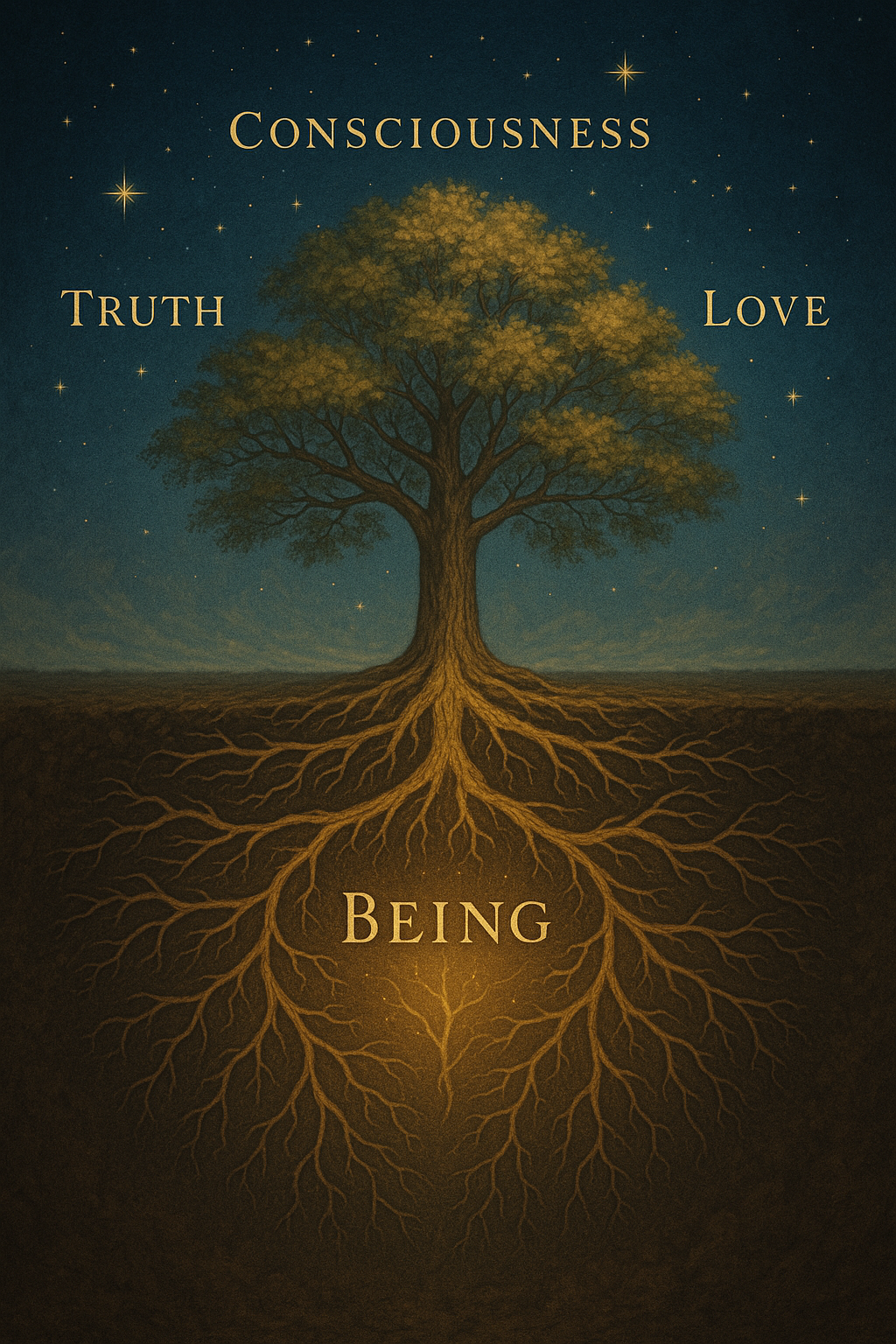
Metaphysics: The Roots Beneath The Surface.
The Great Divide: Science vs. Philosophy?
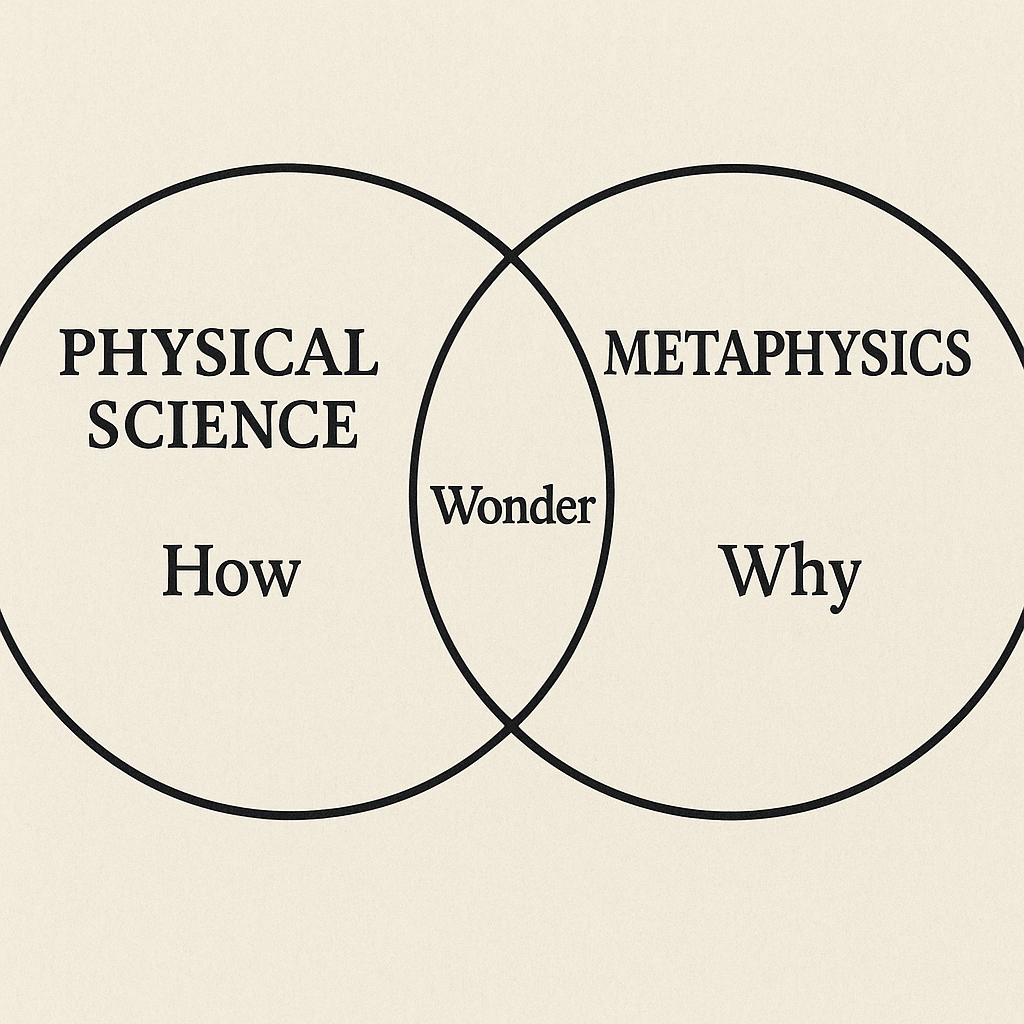
The so-called conflict between science and philosophy is often a misunderstanding of domains. Science, rooted in the physical, tells us how. Philosophy, rooted in the metaphysical, asks why.
As physicist Max Planck, father of quantum theory, once said:
“Science cannot solve the ultimate mystery of nature. And that is because, in the last analysis, we ourselves are a part of the mystery that we are trying to solve.”
Even modern science—especially in quantum mechanics and cosmology—is reaching the metaphysical horizon. Consider the observer effect in quantum physics: particles behave differently depending on whether they are observed. This suggests that consciousness and physical reality are not separate but interwoven (see Heisenberg, Physics and Philosophy).
Likewise, the Big Bang theory—while rooted in physical evidence—leaves unanswered the metaphysical question: Why is there something rather than nothing?
Where physics ends, metaphysics begins.
The Human Bridge: We Are Both
We are not just bodies, and we are not just souls. We are both.
To reduce a human being to neurons and chemicals is to commit what philosopher Gilbert Ryle called a “category mistake” (The Concept of Mind, 1949). The mind is not just a ghost in the machine—but nor is it merely the machine. It is the meaning of the machine.
Your emotions, your yearnings, your sense of justice, your awe at a sunset—these point beyond the material. They point to a domain where the real is not just what can be seen, but what must be sensed inwardly.
Reuniting the Split: Living an Integrated Life
The modern world has privileged the physical, often at the cost of the metaphysical. This has produced technological marvels—but spiritual disorientation.
To live well is to integrate the two:
To act in the world while contemplating its source.
To build with hands and labor, while loving with heart and spirit.
To question, to learn, but also to remember—what it is we truly are.
This echoes what Carl Jung called individuation: the integration of all aspects of the self, both conscious and unconscious, material and symbolic (Jung, Man and His Symbols).
The Telic life—one lived toward an end, with sacred direction—requires both feet in the world and both eyes on the heavens.
The Telic Path unites the seen and the unseen.
Conclusion: Where Are You Standing?
To awaken wisdom is to discern where you stand—and what you stand for. Are you living only in the physical—counting calories, paychecks, possessions? Or are you also listening to the metaphysical—your intuition, your conscience, your calling?
The question is not whether the metaphysical is real, but whether we are still real enough to perceive it.
“We do not see things as they are. We see them as we are.” — The Talmud
So ask yourself:
What unseen principle is animating your seen life? And are you giving it room to breathe?